New Podcast
Welcome to Speaking Body
A website, podcast, newsletter, and (occasional) video series where I discuss psychoanalysis through a Lacanian orientation, treating it not as a closed-off, fancy-book-learning kind of theory but as a living set of ideas and practices that affect the body, symptoms, desires, impasses, and modes of jouissance (i.e., the ways people produce enjoyment and suffering).
The first episode can be listened to here and watched here.
What to Expect From the Podcast
Sometimes, I’ll examine psychoanalysis primarily as a clinical practice. However, I don’t want to stop at the clinic walls, so there will also be times when I explore how psychoanalytic practices affect subjects as they live their day-to-day lives outside the confines of a psychoanalytic session.
It is also an examination of how psychoanalysis intersects with other areas such as art, politics, technology, fitness, and other sundry aspects of contemporary life. My aim is to examine these intersections with rigor, openness, and curiosity.
Why am I going to the trouble of making Speaking Body
There is a lot of content that engages with psychoanalytic theory, and much of it is very interesting. However, there is less content that focuses on psychoanalysis as an experience. My hope is to fill that gap with what I express here.
In Addition
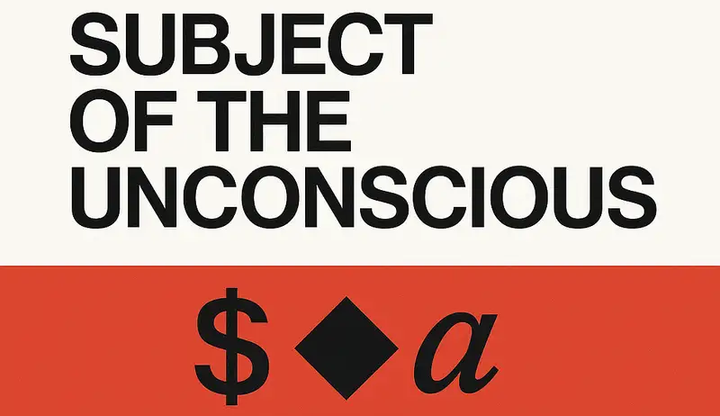
I find that much of the material that seriously engages with Lacanian theory or practice can be dense and difficult to understand. There are many reasons for this, but the chief among them is that Lacan’s writing and his seminars are full of terms and symbols (e.g., mathemes, graphs, formulas, etc.) that are not part of everyday speech. In addition, Lacan uses everyday words (such as desire, love, and real) in novel ways that differ markedly from how most people use them.
Learning “the Lacanian parlance” requires effort on the part of the person reading Lacan’s words. If someone puts in the work and learns the specialized vocabulary, it becomes possible to speak with others who share that vocabulary in very interesting and productive ways. This is a worthwhile reward for the work you've put in!
Be that as it may, the Lacanian parlance can also be a kind of crutch that Lacanians use to say things in ways that can be understood by non-Lacanians. I’ve personally seen people use the parlance to hide how much they don’t know about psychoanalysis. (When someone says something in a language you don’t know, it is difficult to challenge them or ask them questions.) I’ve also seen people spend a lot of time arguing over what a specific term means, rather than saying what they want to say in a way that does not require the term with a contested meaning.1
Thus, one of the things I want to do by making Speaking Body is speak in two languages.
- I don’t want to dumb things down, so there will be times when I use lots of fancy Lacanian terms, symbols, and formulas.
- But, when I do this, I’m also going to try to re-describe what I say with Lacanian language in using everyday language, so that people who are not deeply steeped in Lacan might come to understand something about the Lacanian orientation.
Fin
If all that sounds interesting to you, great! I hope you’ll keep reading, listening, and watching what I make.
-Neil